
Computer Science
Gibbons Lecture Series: Co-operating computers - problems and prospects
Presented in association with the NZCS
|
Speaker: Professor James Goodman, Department of Computer Science, The University of Auckland
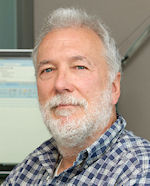
When: Refreshments at 5.30pm, lecture starts at 6.00pm. Professor Goodman received a PhD from the University of California, Berkeley in 1980. He then joined the faculty at the University of Wisconsin-Madison. His research is focused mainly on computer architecture: the hardware/software interface, and particularly on memory, multiprocessors and synchronisation. His current interests are primarily focused on support for Transactional Memory, a programming model that dramatically simplifies programming for parallel computers. He joined the Auckland CS Department in 2003 while continuing his practical interests in collaboration with Sun Microsystems. Goodman is most well known for his paper on "Using cache memory to reduce processor-memory traffic" where he was the first to describe snooping cache coherence protocols. He is a Fellow of the IEEE and a Fellow of the ACM.
Synopsis: In recent years computer electronic circuitry has become so dense that even personal computers possess two or more processors, or "cores", and this number is likely to grow. The largest computers have long made use of many processors programmed to cooperate in running problems of coordination and consistency. Large problems requiring large computers tend to be highly structured, and can be broken apart in many ways. Even so, it has been challenging to solve a single problem using many processors, and as parallel processing comes to personal computers, the problems become much harder: their programs tend to be less structured and harder to divide. For many problems today, it is difficult to get two computers to solve the problem faster than one. We now know that programming parallel computers is difficult, and new techniques must be developed to meet the challenge. |
 |


